The Restaurant Owner's Playbook for Daypart Menus: Automate Breakfast, Lunch, Dinner, and Happy Hour
Master your daypart menu strategy for your restaurant. Learn how to automate menu switching, optimize pricing, and boost revenue across every service period.
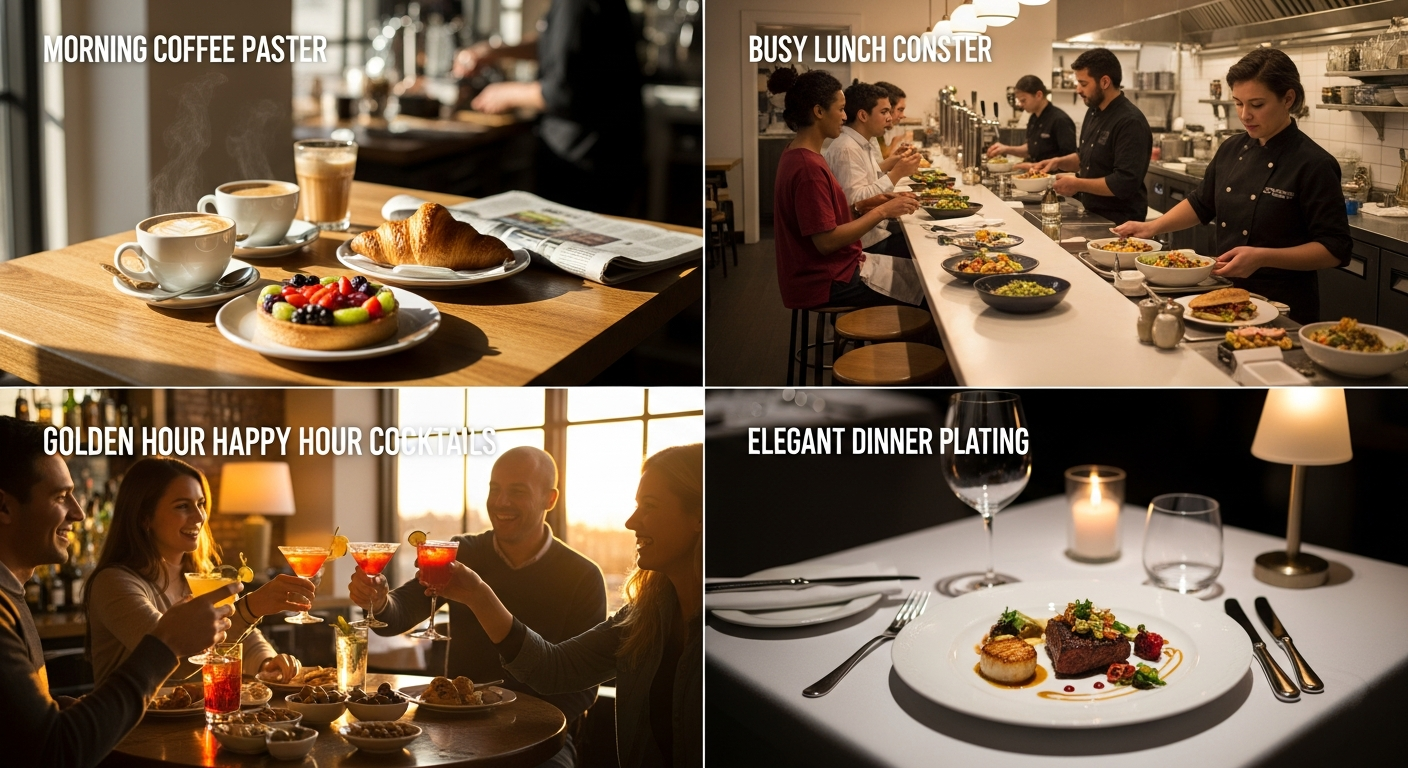
A single static menu is leaving money on the table - literally. The guest who walks in at 11:30 AM wants a quick, affordable lunch combo. The couple arriving at 7:30 PM expects a curated dinner experience worth a premium. And the after-work crowd at 4:45 PM? They're hunting for a deal that gets them through the door. Serving all three groups the same menu at the same prices is one of the most common - and most costly - mistakes in restaurant operations. A well-executed daypart menu strategy for your restaurant can fix that overnight.
What Daypart Menus Are and Why They Increase Average Check Size
Daypart menus are distinct menus (or menu configurations) served during specific windows of the day. Instead of one all-day menu, you present targeted offerings - different items, different prices, different layouts - based on the time a guest is ordering.
Why does it work? Three reasons:
- Relevance drives conversion. A focused lunch menu with 12 items outsells a 60-item all-day menu because guests make faster, more confident decisions.
- Price segmentation captures more willingness to pay. Dinner guests accept higher prices for the same protein when it's presented in a dinner context with upgraded sides and plating language.
- Daypart-specific promotions create urgency. Happy hour only works because it ends. Scarcity and time pressure are powerful purchase drivers.
According to the National Restaurant Association's 2025 State of the Industry report, restaurants that actively manage menu mix across dayparts see 8–15% higher per-cover revenue compared to those running static menus.
The Four Key Dayparts and How to Define Yours
Most restaurants operate around four natural dayparts, but the exact windows should be driven by your POS traffic data, not industry defaults.
Breakfast / Brunch (6:00 AM – 11:00 AM) - Typically your lowest average check but highest margin on beverages. Coffee and specialty drinks carry 80%+ margins.
Lunch (11:00 AM – 2:30 PM) - Speed and value dominate. Guests have 30–45 minutes. Bundling (entrée + drink + side at a set price) consistently lifts check averages by $2–4.
Happy Hour / Afternoon (2:30 PM – 5:30 PM) - The bridge daypart most restaurants ignore. Operators who add a structured happy hour menu report 20–30% more covers during this window.
Dinner (5:30 PM – Close) - Your premium daypart. Guests expect a full experience. This is where you showcase high-margin signature dishes.
How to find your actual daypart boundaries: Pull 90 days of POS data. Chart orders by 30-minute intervals. You'll see natural inflection points where traffic shifts.
Pricing Psychology for Each Daypart Menu Strategy
Each daypart has its own pricing psychology:
Breakfast: Anchor on beverages. Lead with specialty coffee and fresh juice at visible price points. A $6 lavender oat latte makes a $13 avocado toast feel reasonable.
Lunch: Lead with bundles and perceived value. The most effective lunch pricing strategy is the combo deal. A "Lunch Express" section with 3–4 combos can drive 40% of your midday orders.
Happy Hour: Use sharp discounts on entry items, full price on follow-ons. Discount your appetizers aggressively - these get people in the door. But keep premium cocktails at regular price. The $5 flatbread gets them in; the $14 craft cocktail makes the daypart profitable.
Dinner: Premiumize through description and context. The same grilled salmon that's "$16 - served with rice and seasonal vegetables" at lunch becomes "$28 - cedar-planked Atlantic salmon, saffron risotto, broccolini, lemon beurre blanc" at dinner.
How to Set Up Automated Daypart Menu Switching
Here's where most restaurants stall. Managing four menus manually creates operational overhead that kills the strategy before it starts.
This is exactly the problem digital menu platforms solve. With a tool like Vino, you configure your daypart menus once, set the time windows, and the system handles the switch automatically. No staff intervention, no confusion, no printing costs.
Here's a practical setup checklist:
- Audit your current menu. Identify which items belong in which daypart. Some items may appear across all dayparts.
- Build each daypart menu separately. Don't just hide items - actively curate. Rewrite descriptions for context.
- Set transition rules. Decide whether transitions are hard or soft (both menus available for a 15-minute overlap).
- Configure pricing per daypart. The same item can have different prices in different dayparts.
- Test for two weeks, then optimize. Track per-daypart revenue, average check, and item mix.
Real Revenue Impact After Implementing Daypart Menus
The numbers from restaurants that have committed to daypart menus are compelling:
- Average check increases of 10–18% within the first 60 days
- Happy hour cover counts up 25–35% when a dedicated happy hour menu replaces ad-hoc verbal specials
- Lunch ticket times drop by 3–5 minutes with a streamlined, focused lunch menu
- Food cost improvements of 1–2 percentage points because daypart menus let you feature different proteins at different times
One fast-casual operator in Austin reported that simply splitting their all-day menu into lunch and dinner versions - with no changes to recipes or staffing - increased monthly revenue by $8,400 across two locations.
Common Mistakes That Kill Daypart Profitability
Too many items per daypart. If your dinner menu still has 55 items, you haven't dayparted. Aim for 20–30 items for full-service, 10–15 for fast-casual.
Ignoring the transition experience. A guest who sits down at 5:25 PM and gets told "that menu ended five minutes ago" is an unhappy guest. Build in grace periods.
Setting it and forgetting it. Daypart menus need quarterly reviews at minimum.
Not training front-of-house staff. Your servers need to understand the why behind daypart menus.
Pricing dayparts in isolation. Keep dinner premiums in the 25–40% range over lunch for comparable items.
You don't need to overhaul your entire operation. Start with one split - separate your lunch and dinner menus. The data will make the case for expanding to a full four-daypart strategy. Ready to set up automated daypart menus? See how Vino makes it simple →
Ready to go digital?
Create your restaurant's smart digital menu in minutes with Vino. No app downloads, no complicated setup.
Latest Posts
How Independent Restaurants Can Go Digital on a Shoestring Budget
6 min read
Contactless Ordering for Restaurants: The 2026 Guide
7 min read
How to Make Your Digital Menu ADA and EAA Compliant (Before You Get Fined)
6 min read
Allergen Compliance on Digital Menus: A Guide for EU and UK Restaurants
5 min read