Allergen Compliance on Digital Menus: A Guide for EU and UK Restaurants
Learn how digital menu allergen compliance helps EU and UK restaurants meet regulations, reduce errors, and protect guests with automated filtering.
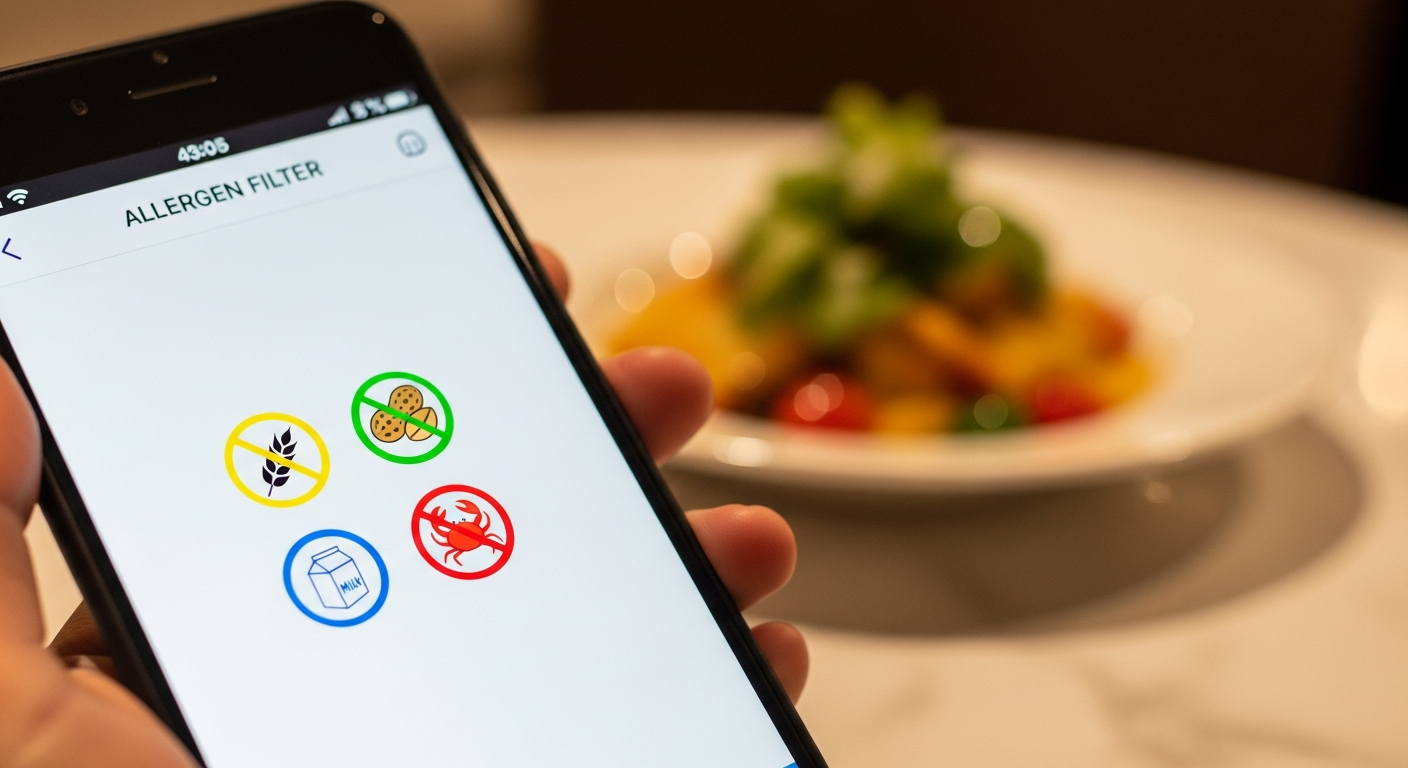
In 2025, a London bistro was fined £18,000 after a diner with a sesame allergy suffered anaphylaxis - all because a handwritten specials board failed to mention tahini in the dressing. Incidents like this are not rare. The UK Food Standards Agency recorded over 100 allergen-related enforcement actions in the past year alone. For restaurant owners across the EU and UK, digital menu allergen compliance is no longer optional - it is a legal and moral imperative.
This guide breaks down the regulations you need to know, explains why traditional menus fall short, and shows you exactly how to use digital menus to protect your guests and your business.
The Regulatory Landscape: EU 14 Allergens, Natasha's Law, and FSA Mandates
If you serve food in the EU or UK, you are legally required to communicate allergen information to your customers. Here is what you need to know in 2026:
EU Food Information for Consumers Regulation (FIC - Regulation No. 1169/2011) requires all food businesses across EU member states to declare the presence of 14 major allergens in any food sold or provided. These include celery, cereals containing gluten, crustaceans, eggs, fish, lupin, milk, molluscs, mustard, nuts, peanuts, sesame, soybeans, and sulphur dioxide. The information must be available before the customer makes a purchase.
Natasha's Law (UK, October 2021) tightened requirements for prepacked-for-direct-sale foods, mandating full ingredient lists with allergens emphasised. While it primarily targets grab-and-go items, it set a clear direction: the UK expects more transparency, not less.
FSA Written Allergen Information guidance now strongly encourages - and in many local authority areas effectively requires - that restaurants provide allergen data in writing rather than relying on verbal communication alone. The days of "ask your server" as a compliance strategy are numbered.
The penalties are real. Fines can reach tens of thousands of pounds, and in severe cases, criminal prosecution follows.
Why Paper Menus Fail at Digital Menu Allergen Compliance
Most restaurants still manage allergens with paper menus, laminated allergen matrices, or binder folders kept behind the counter. This approach has critical weaknesses:
- Reprinting costs add up fast. Every recipe change, seasonal update, or supplier substitution means reprinting allergen information. A mid-sized restaurant changing its menu quarterly can spend £800–£1,500 per year on reprints alone.
- Human error is inevitable. When a chef swaps an ingredient, that change must be communicated to front-of-house, updated on the allergen matrix, and confirmed across all printed materials. Communication breakdowns happen in roughly 1 in 5 menu changes.
- Paper cannot filter. A guest with a nut allergy scanning a 40-item menu has to cross-reference every dish against an allergen chart. It is slow, stressful, and error-prone.
- Accountability gaps. Paper trails are hard to audit. If an incident occurs, proving that correct allergen information was displayed at the time of the order is nearly impossible.
How Digital Menus Automate Allergen Filtering and Display
A well-built digital menu transforms allergen compliance from a manual burden into an automated system:
Real-time updates. When a recipe changes, you update the dish once in your dashboard. The allergen information propagates instantly to every QR code, tablet, and screen in your restaurant.
Guest-side filtering. Diners select their allergens - say, gluten and dairy - and the menu instantly highlights safe dishes or hides unsafe ones. This is the single most effective way to prevent ordering errors.
Standardised allergen icons. Digital menus display the 14 EU allergens using universally recognised icons alongside each dish. No ambiguity, no squinting at fine print.
Audit trails. Every menu version is logged with a timestamp. If an incident ever occurs, you can demonstrate exactly what allergen information was displayed and when.
Platforms like Vino are built specifically for this: letting restaurants manage allergen data centrally and present it to guests through clean, filterable digital menus that update in real time.
Step-by-Step: Setting Up Allergen Filters on Your Digital Menu
Getting your digital menu allergen compliance right does not require a technology degree:
- Audit every dish. Go through your full menu with your head chef. For each item, document every ingredient and identify which of the 14 EU allergens are present. Do not forget sauces, garnishes, and oils.
- Map allergens in your platform. Tag each dish with its allergens using the checkbox interface.
- Enable guest-facing filters. Turn on the allergen filter feature so diners can select their allergies and see a personalised safe menu.
- Add allergen icons to each dish. Display small, recognisable icons next to every item.
- Set up change alerts. Configure your system so that any recipe or ingredient edit triggers a review of allergen tags.
- Train your team. Even with a digital system, staff must understand allergen protocols.
- Test quarterly. Have a manager role-play as an allergic guest every quarter. Can they easily find safe options?
How One Restaurant Reduced Allergen Incidents With Digital Menus
A family-run Italian restaurant in Manchester with 65 covers was averaging two allergen-related complaints per month - mostly from dairy and gluten miscommunications. Their paper allergen matrix was outdated by the time it was printed.
After switching to a digital menu with built-in allergen filtering, the results over six months were clear:
- Allergen complaints dropped from two per month to zero.
- Menu update time fell from three hours to fifteen minutes.
- Guest satisfaction scores related to dietary accommodations rose by 30%.
- The restaurant passed its next local authority inspection with no allergen-related findings for the first time in three years.
Compliance Checklist: Is Your Restaurant Meeting the Standard?
Use this checklist to assess your current allergen compliance:
- All 14 EU allergens are identified and documented for every menu item, including specials
- Allergen information is available to guests in writing before they order
- Allergen data is updated within 24 hours of any recipe or ingredient change
- Staff are trained on allergen communication protocols at least twice per year
- You have a system to log and track allergen-related customer complaints
- Guests can filter your menu by allergen without asking a server
- Your allergen information is available in at least one additional language in tourist areas
- You can produce a timestamped record of what allergen information was displayed on any given date
If you scored six or fewer, a digital menu platform is the fastest path to full compliance. Allergen compliance is not a box-ticking exercise - it is how you protect your guests, your staff, and your livelihood. It also pairs closely with broader digital menu accessibility compliance, which ensures every guest can navigate your menu regardless of ability. Explore how Vino's smart menu features make allergen compliance simple, and start protecting your guests from their very next visit.
Ready to go digital?
Create your restaurant's smart digital menu in minutes with Vino. No app downloads, no complicated setup.
Latest Posts

How Independent Restaurants Can Go Digital on a Shoestring Budget
6 min read
Contactless Ordering for Restaurants: The 2026 Guide
7 min read

The Restaurant Owner's Playbook for Daypart Menus: Automate Breakfast, Lunch, Dinner, and Happy Hour
9 min read
How to Make Your Digital Menu ADA and EAA Compliant (Before You Get Fined)
6 min read