How to Increase Restaurant Table Turnover Without Rushing Your Guests
Learn proven strategies to increase restaurant table turnover by up to 25% while keeping guests happy. Practical tips for pacing, tech, and layout.
On this page 7
Your restaurant has 30 tables. On a Friday night, each one turns once - maybe twice if you're lucky. That means your revenue ceiling is locked, no matter how packed your waitlist gets. The single most effective lever you can pull to grow sales without expanding your footprint is to increase restaurant table turnover. And no, it doesn't mean hovering over guests with the check before they've finished dessert.
The difference between a restaurant that turns tables 1.5 times per service and one that hits 2.5 is enormous. On a 30-table floor averaging $85 per cover, that extra turn adds over $2,500 per night - roughly $75,000 a month. According to the National Restaurant Association, labor and occupancy are the two largest fixed costs in foodservice, which means revenue-per-seat-hour is the metric that actually determines whether you're profitable or just busy.
Here's how to speed up the cycle without making anyone feel rushed.
Streamline the Ordering Process to Increase Restaurant Table Turnover
The clock starts the moment a guest sits down, and the biggest chunk of dead time happens before anyone orders. Guests wait for menus, wait for the server, ask questions about allergens, change their minds, wait again. In a typical full-service restaurant, the gap between seating and order submission is 12 to 18 minutes. Cut that in half and you've already shaved a meaningful amount off your total table time.
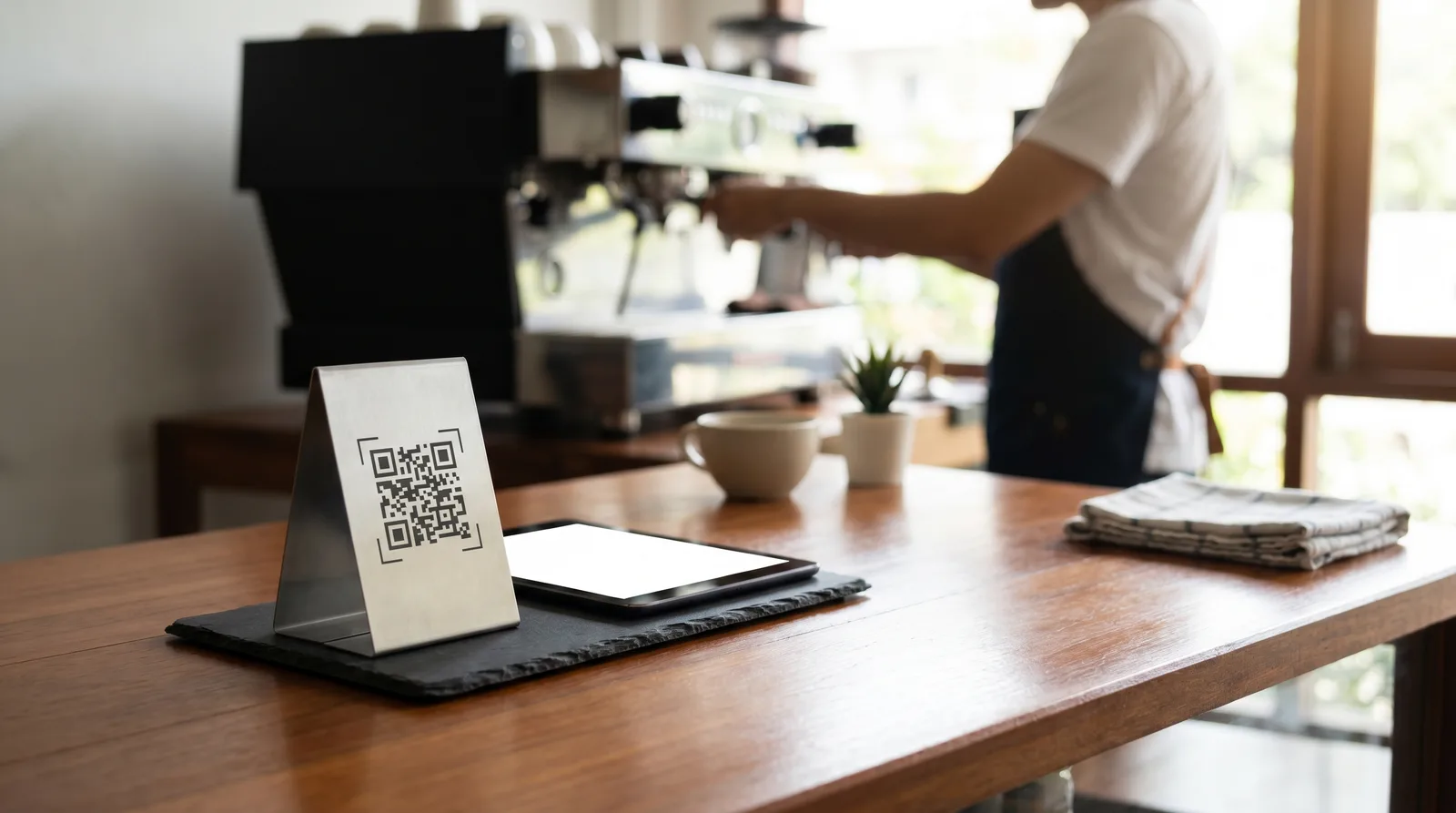
Digital menus accessed via QR code eliminate the handoff delay entirely - and the benefits of QR code menus go well beyond speed. Guests start browsing the second they sit down - no waiting for a server to drop off menus. Platforms like Vino take this further with clear allergen details and multilingual support, so guests answer their own questions instead of flagging down staff. The result is faster decisions, fewer back-and-forth exchanges, and orders placed sooner.
A few other ordering-side wins:
- Limit menu size. Research consistently shows that menus with 7-10 items per category lead to faster decisions than menus with 15+. Paradox of choice is real.
- Highlight popular items. A "Most Ordered" or "Chef's Pick" badge gives indecisive guests an easy out.
- Pre-set combo meals. Bundled options reduce the number of individual decisions a guest has to make.
Optimize Kitchen Workflow and Ticket Times
Front-of-house speed means nothing if the kitchen can't keep pace. Long ticket times create a bottleneck that stalls everything downstream - guests linger waiting for food, servers can't flip tables, and the waitlist grows while empty plates sit on tables that should already be cleared.
Start by measuring your actual ticket times by dish. You may discover that one slow-cooking entrée is dragging your average up by five minutes. Consider whether that item can be prepped differently, moved to a specials-only slot, or removed entirely during high-volume services.
Practical steps to tighten the kitchen:
- Stagger firing. Train your expo to fire courses at consistent intervals rather than letting the kitchen batch everything at once. Guests who receive appetizers quickly feel attended to and are more patient with the entrée.
- Simplify your peak menu. Some restaurants run a reduced menu on Friday and Saturday nights - fewer items means faster prep, fewer mistakes, and shorter ticket times.
- Batch prep aggressively. Everything that can be portioned, sauced, or garnished before service should be. The line should be assembling, not cooking from scratch during the rush.
- Use KDS over paper tickets. Kitchen display systems reduce misreads, auto-prioritize by seat time, and give you data on where slowdowns actually happen.
A well-run kitchen should be pushing entrées in 12-15 minutes during peak service. If you're consistently above 20, that's your bottleneck - not your host stand.
Design Your Floor Plan for Faster Flow
Table turnover isn't just about speed - it's about spatial efficiency. The physical layout of your dining room has a direct impact on how quickly guests move through their experience, and how quickly your team can reset for the next party.
Consider these layout adjustments:
- Right-size your tables. If 60% of your covers are two-tops but half your floor is four-tops, you're wasting capacity every night. Flexible seating - small tables that can be pushed together for larger parties - maximizes coverage.
- Position the bus station centrally. Servers and bussers should never have to cross the entire floor to drop dishes. A well-placed bus station cuts reset time by two to three minutes per table.
- Create clear traffic lanes. Congested pathways between tables slow down server movement and food delivery. Even six inches of extra clearance between sections can speed up service noticeably during a rush.
- Separate bar seating from dining. Walk-in guests waiting for a table should have a holding area (ideally the bar) that doesn't block the dining room. This keeps seated diners comfortable and lets your host manage the waitlist without visual pressure.
The goal is to make the physical space work with your service flow, not against it. Walk your floor during a busy service and watch where staff hesitate, double back, or wait for someone to move. Those friction points are costing you turns.
Master the Art of Check Timing and Table Clearance
The end of the meal is where most restaurants leak time. Guests finish eating, but the check doesn't arrive for another 8-10 minutes. Then there's the card processing delay, the receipt signing, the slow departure. By the time the table is cleared and reset, 15-20 minutes have passed after the last bite.
Tightening this phase doesn't require rushing anyone - it requires better systems:
- Pre-drop the check with dessert. When the dessert course arrives (or when guests decline dessert), place the check on the table. This signals that it's ready when they are, without creating pressure.
- Offer contactless payment. Tableside tap-to-pay or QR-code payment eliminates the round trip of taking the card to the POS terminal, running it, printing a receipt, and returning it. This alone saves 4-6 minutes per table.
- Assign a dedicated busser during peak hours. A server who clears and resets their own tables is a server who isn't greeting their next party. Dedicated bussers can turn a table in under 3 minutes - silverware, linens, wipe-down, reset.
- Standardize your table reset. Every table should be set identically so that the reset process is automatic. If your bussers have to think about what goes where, they're slower than they need to be.
The gap between "guest stands up" and "next guest sits down" should be under five minutes. Time it during your next service and you'll likely find it's closer to ten.
Use Reservation and Waitlist Technology to Control Pacing
You can't increase restaurant table turnover if your seating is unpredictable. Walk-in-only restaurants are at the mercy of random arrival patterns - a wave of ten parties at 7:15 followed by an empty stretch at 8:00. A dedicated reservation system - working alongside your digital menu - lets you control the cadence.
The key is staggered seating intervals. Instead of booking every table at 7:00 and 9:00 (the classic "two-turn" approach), book in 15-minute windows: 6:30, 6:45, 7:00, 7:15. This creates a rolling flow where tables open up continuously rather than all at once.
For restaurants that rely heavily on walk-ins, a digital waitlist with estimated wait times helps manage guest expectations and reduces no-shows from the queue. Guests who can track their position from their phone are less likely to leave, and you can text them the moment a table opens - no shouting names across a crowded lobby.
A few advanced moves:
- Set dining time expectations at booking. "Your table is reserved for 90 minutes" is standard at high-volume restaurants in cities like New York and London. Guests appreciate the transparency and you get a predictable turn window.
- Overbook strategically. If your no-show rate is 15%, overbooking by 10-12% keeps your floor full without creating waits. Track your no-show data by day and time to dial this in.
- Use table assignment logic. Seat two-tops at two-tops, not at four-tops. It sounds obvious, but hosts under pressure default to the first available table. Smart reservation systems auto-assign based on party size and projected turn time.
Train Your Team to Pace, Not Rush
Every strategy above falls apart without a staff that understands the difference between efficient service and rushed service. Guests should feel attended to, not hurried. The best high-turnover restaurants in the world - think bustling bistros in Paris or izakayas in Tokyo - serve quickly and warmly at the same time.
Training should focus on:
- Attentive check-ins, not interruptions. Servers should pass by tables with a glance, not stop and ask "how is everything?" four times. A nod and brief eye contact tells the guest "I see you" without breaking their conversation.
- Proactive course progression. Don't wait for guests to flag you for the next course. Clear the appetizer plates and verbally transition: "Your entrées are about two minutes out." This keeps the meal moving forward naturally.
- Scripted upsells that don't slow things down. "Can I get you a coffee or dessert?" is one question, not two separate interactions. Consolidate touchpoints wherever possible.
- Pre-shift turn time goals. Share the target with your team: "Tonight we're aiming for 55-minute turns on two-tops." When the staff knows the number, they naturally pace their service to hit it.
The culture you build around pacing matters more than any single tactic. Reward servers who consistently hit turn targets. Celebrate nights where you beat your cover record. Make table turnover a team metric, not a management obsession.
Start Turning Tables Faster Tonight
You don't need a renovation or a new POS system to start seeing results. Begin with the lowest-effort, highest-impact changes: time your current table turns to establish a baseline, pre-drop checks with dessert, and brief your staff on pacing goals before the next dinner service.
From there, layer in the structural improvements - digital menus, smarter reservation tools, layout tweaks, kitchen workflow changes. Each one compounds. A restaurant that shaves three minutes off ordering, four minutes off check settlement, and two minutes off table reset has just gained nine minutes per table. Over a 4-hour dinner service, that's an extra full turn on every table in the house.
More turns means more revenue from the same space, the same staff, and the same hours. It's the closest thing to free money in the restaurant business. The only question is how much time you're leaving on the table right now - and what you're going to do about it. Check out Vino's pricing plans to see how a digital menu can become part of your turnover strategy.
Ready to go digital?
Create your restaurant's smart digital menu in minutes with Vino. No app downloads, no complicated setup.