Digital Wine Lists and Beverage Menus: The Untapped Upselling Opportunity
Discover how a digital wine list can boost restaurant revenue by 15-25%. Learn practical strategies for upselling beverages with smart menu technology.
On this page 6
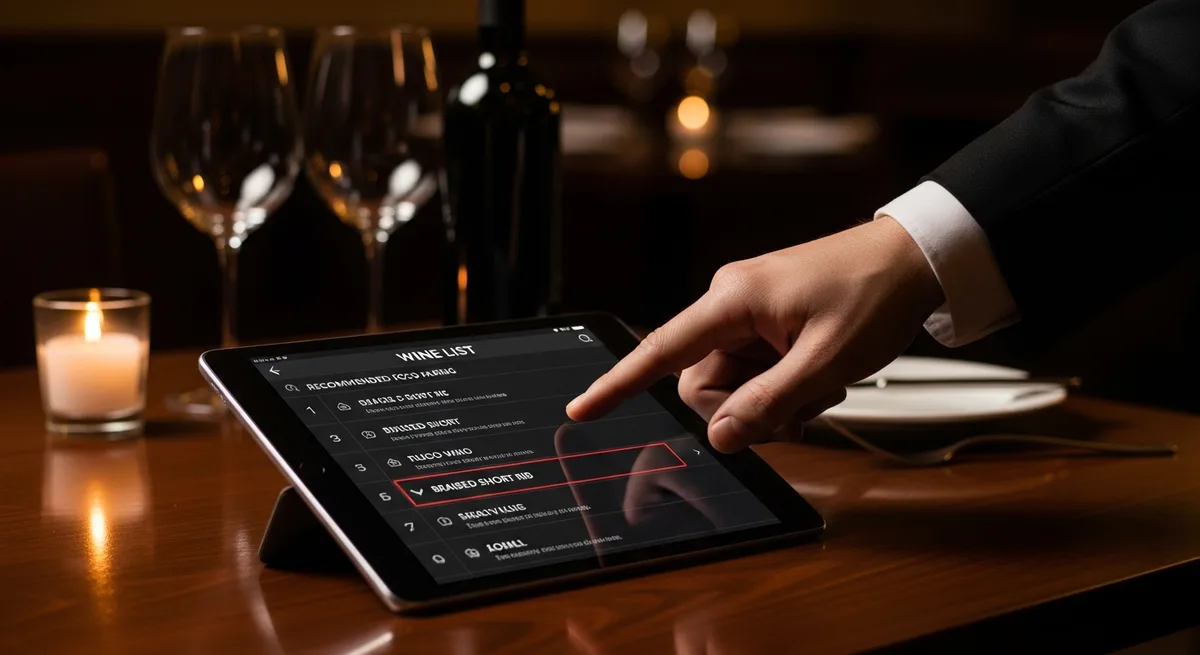
A guest sits down at your restaurant, scans a dog-eared wine list with 80 options, feels overwhelmed, and orders a glass of the house red. You just lost $15-40 in potential revenue - and that scene plays out at dozens of tables every single night. According to the National Restaurant Association's 2025 State of the Industry report, beverages account for roughly 30% of full-service restaurant revenue, yet most operators treat the wine list as an afterthought.
In 2026, restaurants that have moved to a digital wine list are reporting per-table beverage spend increases of 15-25%, and the technology to make it happen is more accessible than ever.
Why Static Wine Lists Cost You Money Every Service
Think about how much effort goes into your food menu. Professional photography, descriptive copy, strategic pricing. Now think about your wine list. For most restaurants, it's a typed list of names, vintages, and prices in a font size that requires reading glasses.
Static wine lists create three persistent problems:
They intimidate guests. The majority of diners feel uncomfortable choosing wine. When faced with a wall of text, most guests default to the cheapest familiar option or skip wine altogether.
They go stale fast. You sell out of a popular bottle on Friday night, but the printed list still features it through Sunday brunch.
They can't sell. A static list can't highlight your highest-margin bottles, surface seasonal pairings, or guide a guest from a $12 glass to an $18 glass with a compelling tasting note.
How a Digital Wine List Increases Per-Table Spend
A 2024 Deloitte hospitality technology survey found that restaurants using interactive digital menus saw an average check increase of 22% on beverage orders specifically.
Visual storytelling sells. When a guest sees a photo of a vineyard, reads a two-sentence tasting note, and notices a rating from other diners, they don't just order wine - they order *that* wine.
Smart defaults shift behavior. Digital menus let you control what guests see first. Feature high-margin bottles at the top, highlight "Staff Picks," and use strategic nudges.
By-the-glass upselling becomes effortless. A digital list can prompt: "Enjoying this Malbec by the glass? A full bottle saves you 20%."
Restaurants using platforms like Vino to power their digital beverage menus have found that even modest improvements translate to tens of thousands of dollars in annual revenue.
Auto-Pairing: The Right Wine With Every Dish
When a guest orders the pan-seared salmon, a digital wine list can instantly surface wines that complement it - a crisp Sancerre, a Willamette Valley Pinot Gris, or an unexpected dry Riesling that becomes the talking point of the meal.
Auto-pairing works on two levels:
- It removes friction. The guest doesn't have to guess or ask. The suggestion is right there.
- It drives trade-ups. A guest who was going to skip wine entirely now has a specific, confident recommendation.
For restaurants with rotating seasonal menus, auto-pairing is especially powerful. Update the food menu, and the wine pairings update with it - no reprinting, no staff retraining.
Real-Time Inventory Sync: Never Sell What You Don't Have
Few things erode trust faster than a guest choosing a wine and hearing, "Sorry, we're actually out of that one."
Real-time inventory sync solves this entirely. When the last bottle of your 2021 Barolo is sold, it disappears from the digital list - or shows as "Limited: 1 bottle remaining," which is a powerful scarcity cue.
This capability also helps your purchasing. When you can see exactly which wines are moving and which are collecting dust, you make smarter buying decisions.
Beyond Wine: Cocktails, Craft Beer, and Non-Alcoholic Options
The biggest growth categories in restaurant beverages right now are craft cocktails, local beer, and the booming non-alcoholic segment. In 2026, the non-alcoholic spirits market alone is projected to exceed $30 billion globally.
A digital beverage menu lets you showcase all of these categories with the same richness:
- Craft cocktails with ingredient lists and flavor profiles that justify a $17 price point
- Local and rotating beer selections that update as kegs change, with IBU ratings and food pairings
- Non-alcoholic options presented with the same prestige as their alcoholic counterparts
When your non-alcoholic options look compelling, the non-drinker orders a $10 craft mocktail instead of a $3 soda. Multiply that across your weekly covers and the revenue impact is significant.
Turning Your Beverage Menu Into Your Highest-Margin Asset
Your food menu gets all the attention. Your beverage menu generates disproportionate profit. The gap between those two realities is where money is being left on the table - literally.
The shift to a digital wine list isn't about chasing technology trends. It's about applying the same strategic thinking to your drinks program that you already apply to your food: presentation, personalization, smart defaults, and real-time accuracy. Beverage upselling is just one piece of the puzzle - for a broader look at how digital menus drive revenue, see our guide on restaurant upselling techniques.
Start with your wine list. Digitize it, add tasting notes and pairing suggestions, feature your high-margin bottles, and sync your inventory. Then expand to cocktails, beer, and non-alcoholic options. The infrastructure is the same, and the payoff compounds with every service.
If you've been looking for the single highest-ROI technology investment for your restaurant in 2026, this is it. Explore what Vino can do for your beverage program and see the full feature set here.
Ready to go digital?
Create your restaurant's smart digital menu in minutes with Vino. No app downloads, no complicated setup.
Related articles
We Analyzed 30,000 QR Menu Interactions. Here Is the Data on How Diners Really Read Your Menu.
8 min read
Why Every Restaurant Owner Needs a Peer Community
5 min read
Digital Menu Without a POS: Toast & Square Alternatives
6 min read
Digital Menu Customer Journey for Customer Retention
6 min read