Why Every Restaurant Owner Needs a Peer Community
A restaurant owner community gives you faster answers, honest menu feedback, and ideas that survived real dinner rushes. Here is where to find yours.

On this page 6
Running a restaurant is one of the few jobs where you can be surrounded by people for twelve hours and still make every hard decision alone. Your staff looks to you for answers. Your accountant sees the numbers, not the floor. And the person who best understands your Tuesday-night problem is not in your building at all. They are running a different restaurant across town, or across the world, quietly solving the same thing.
That is the case for joining a restaurant owner community: not networking for its own sake, but borrowed experience, on demand, from people who have already paid for the lesson.
What a restaurant owner community actually gives you
Strip away the buzzwords and a good restaurant owner community does four concrete things:
- Compresses trial and error. Someone has already tested QR codes on table tents versus stickers, or a two-page menu versus six. You get their result without burning a month on your own experiment.
- Gives you honest feedback. Your regulars are polite and your staff is diplomatic. Strangers who run restaurants will tell you in one sentence why your menu feels crowded or your photos undersell the food.
- Keeps you current without a conference ticket. Menu pricing shifts, new tools, changing guest habits: peer threads surface them while they are still fresh, not a year later in a trade magazine.
- Reminds you that the hard parts are normal. Staffing gaps, no-show tables, supplier surprises. Reading twenty owners describe the same struggle changes how alone you feel at 1 a.m. after close.
Industry bodies like the National Restaurant Association publish excellent research, and it is worth reading. But research tells you what is happening on average. A peer community tells you what happened last Friday, in a restaurant like yours.
Six questions a peer community answers faster than a search engine
Search engines are good at definitions and bad at judgment calls. These are the questions owners actually bring to their peers:
- "Is 28 percent food cost normal for a place like mine, or am I leaking money?"
- "Guests keep asking for the WiFi before the menu. How did you set up your table QR codes?"
- "Did raising dessert prices by two euros actually change how many you sold?"
- "What do you say to a two-star review that is half fair and half unfair?"
- "Does anyone actually use the analytics in their menu platform, and what do you look at weekly?"
- "My lunch traffic died after the office nearby closed. What worked for you?"
None of these has a universal answer. All of them have someone who just lived through it.
Where restaurant owners gather online
The landscape is bigger than most owners realize. Reddit hosts long-running general communities where restaurateurs and staff trade war stories. Facebook groups skew local and are useful for city-specific supplier and hiring talk. Discord servers are faster-moving but harder to search later.
Reddit has quietly become the most useful format for restaurant conversations for one reason: threads persist and rank in search. A pricing discussion from months ago is still findable, still readable, and still useful, which is rarely true of a chat message or a story that disappears.
The trade-off is noise. General communities cover everything from franchise disputes to kitchen memes, so finding conversations about your specific stack, your menu, your tools, takes patience.
Meet r/vinosmart: a community built around the menu
That gap is why we opened the Vino community on Reddit, a space focused on the thing every restaurant decision eventually touches: the menu. It is where owners and managers post their digital menus for feedback, compare QR and table service setups, share AI food photo results, and tell the Vino team what to build next. Feature requests posted there go straight to the people shipping the product.
It is a public subreddit: free to read for anyone, free to join with a Reddit account, and open to every restaurant operator, whether or not you use Vino today. You can see how it works and what to post on our community page.
How to get real value in your first week
Whichever community you join, the pattern for getting value is the same:
- Day one: introduce yourself properly. Say what you run, where, and what you are working on. Specific intros get specific replies.
- Day two: answer before you ask. Find one thread where you have real experience and share it. Communities remember contributors.
- Day three: post one real question. Not "any tips?" but "here is my menu, here is my problem, what would you change first?"
- Within the week: close the loop. When advice works, or fails, report back. That follow-up is what turns strangers into your board of advisors.
Fifteen minutes a week is enough. The compounding starts sooner than you expect.
Your next table is a virtual one
You already know how to feed a room full of people. The missing ingredient for most owners is a room that feeds ideas back. Join the conversation at r/vinosmart, introduce yourself, and post the menu question you have been chewing on all month. Someone in the community has already solved it, and they are happy to tell you how.
Ready to go digital?
Create your restaurant's smart digital menu in minutes with Vino. No app downloads, no complicated setup.
Related articles
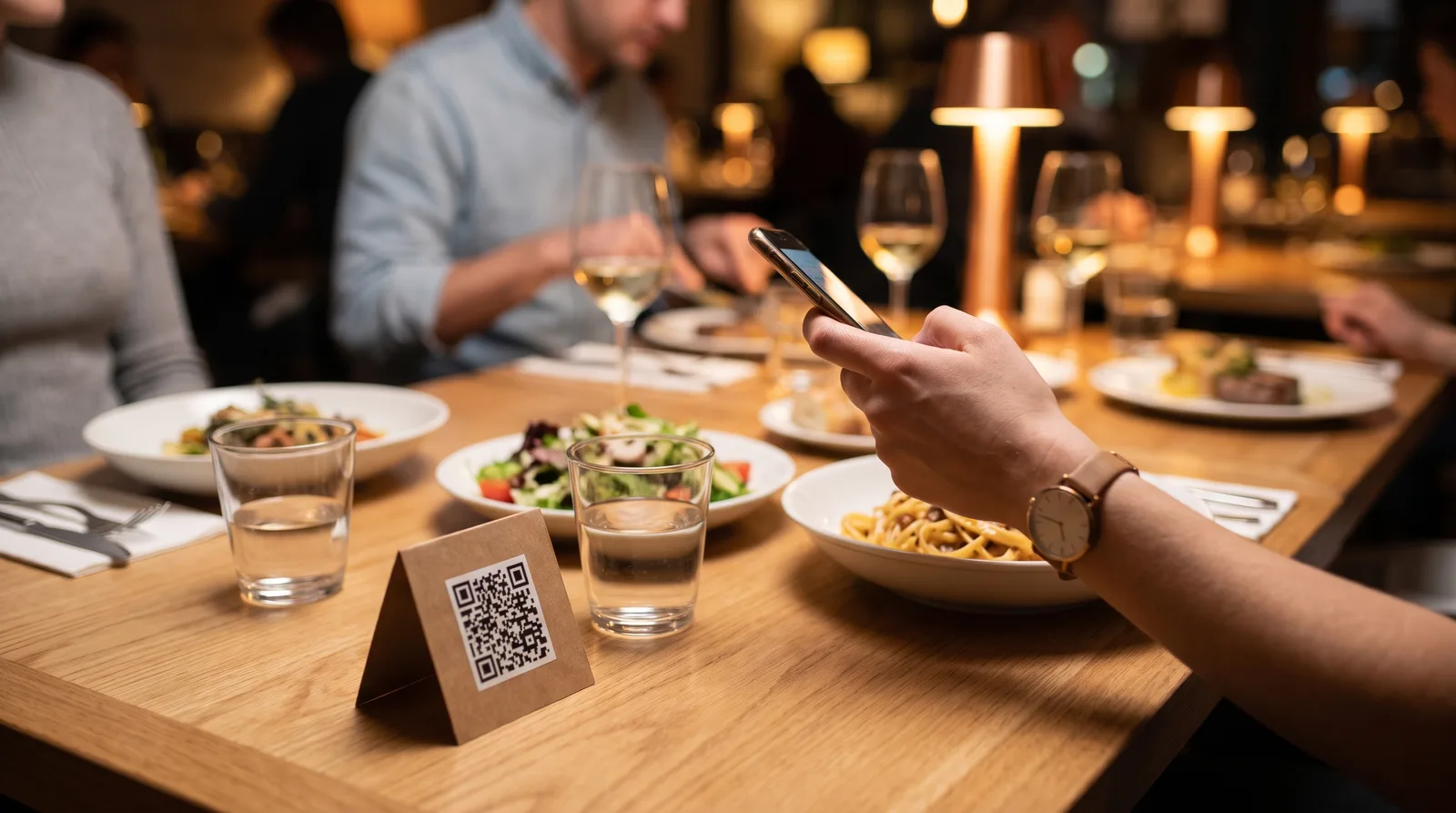
We Analyzed 30,000 QR Menu Interactions. Here Is the Data on How Diners Really Read Your Menu.
8 min read
Digital Menu Without a POS: Toast & Square Alternatives
6 min read

Digital Menu Customer Journey for Customer Retention
6 min read

QR Code Menu vs Printed Menu: A Year of Costs
8 min read