How to Reduce Restaurant Food Waste: A Practical Guide for Operators
Learn proven strategies to reduce restaurant food waste, cut costs, and boost profitability. Actionable steps every restaurant owner can implement today.
On this page 7
Restaurants throw away roughly one-third of the food they purchase. For an average full-service operation spending €80,000 to €120,000 a year on ingredients, that translates to €25,000 to €40,000 going straight into the bin. If you want to reduce restaurant food waste, the good news is that most of the fixes are operational, not expensive, and they start paying for themselves within weeks.
This guide breaks down the strategies that actually move the needle, based on what working restaurants have implemented successfully, not theory from a textbook.
Why Reducing Restaurant Food Waste Matters More Than Ever
The financial case is obvious, but the pressure is coming from multiple directions now. The United Nations Environment Programme (UNEP) estimates that the global food service sector wastes approximately 28 percent of all food it handles. Regulators are taking notice. France already mandates that restaurants above a certain size track and report food waste. Italy offers tax incentives for donations. The EU's Farm to Fork strategy has set a target of halving food waste by 2030.
Customers notice too. Diners increasingly choose restaurants that demonstrate responsible practices, and visible waste is one of the fastest ways to lose credibility with the environmentally aware segment of your market, which now represents a majority of consumers under 40.
The bottom line: reducing food waste is no longer optional. It is a competitive requirement.
Audit Your Waste Before You Fix It
You cannot improve what you do not measure. Before overhauling your purchasing or menu, spend one week tracking exactly what gets thrown away and why.
Run a simple waste audit:
- Place labeled bins in your kitchen: prep waste, spoilage, plate returns, and overproduction.
- Have your team log what goes into each bin at the end of every shift. A clipboard and a sheet of paper works fine.
- At the end of the week, tally the results by category and by day of week.
Most operators who do this for the first time are shocked. The usual pattern is that prep waste and overproduction account for 60 to 70 percent of total waste, while plate returns and spoilage make up the rest. That tells you exactly where to focus first.
Key things to look for:
- Are certain dishes consistently coming back unfinished? That is a portion size problem.
- Is the same ingredient spoiling every week? That is a purchasing or storage problem.
- Are you throwing away large quantities of prepped items on slow nights? That is a forecasting problem.
Once you have a week of data, you have a baseline. Every improvement you make from here is measurable.
Redesign Your Menu to Reduce Restaurant Food Waste
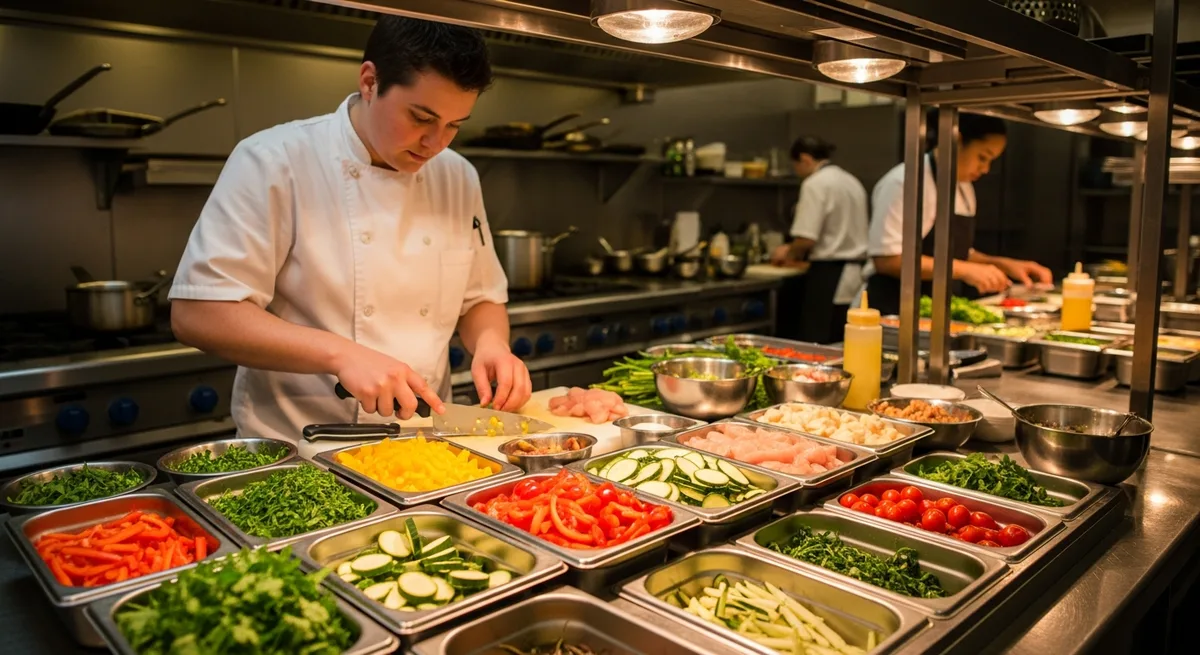
Your menu is the single most powerful lever you have for controlling waste, and most restaurants never think of it that way. Every dish on your menu creates a purchasing commitment, a prep requirement, and a spoilage risk. The more dishes you offer, the more inventory you carry, and the more waste you generate.
Streamline your offerings:
- Cut low-sellers ruthlessly. If a dish sells fewer than 5 portions per week, it is costing you money in wasted ingredients. Remove it or make it a rotating special.
- Cross-utilize ingredients. Design your menu so that the same proteins, vegetables, and sauces appear across multiple dishes. If you buy fresh salmon, it should appear in at least two or three preparations.
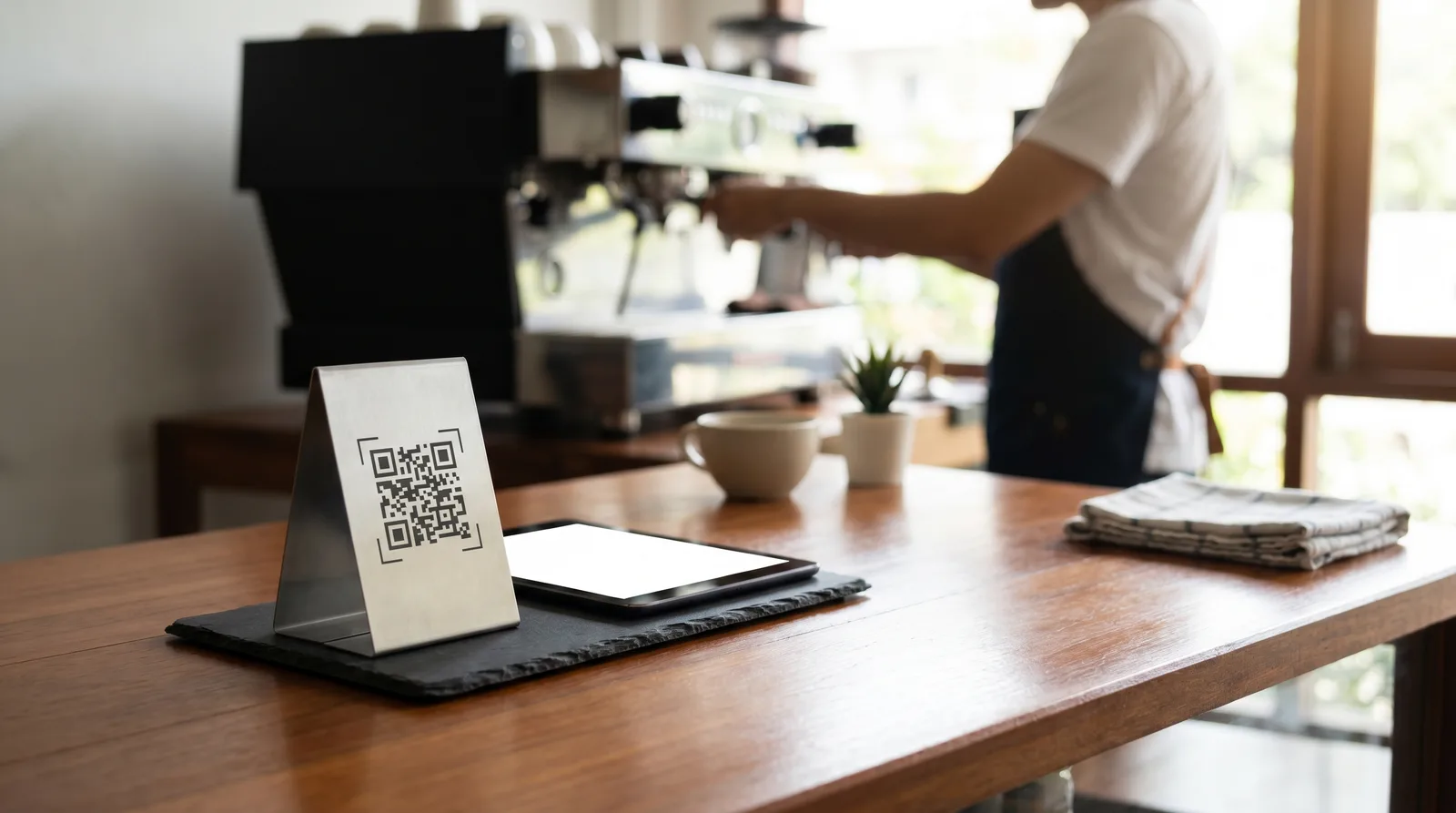
- Use a digital menu to flex in real time. When you run out of an ingredient, a digital menu lets you hide the dish instantly rather than sending servers to apologize table by table. Platforms like Vino make this a one-tap operation, which means your kitchen manager can update availability without calling a meeting.
Portion engineering:
- Weigh your plate returns for a week. If diners are consistently leaving 20 percent of a dish, your portions are too large.
- Offer two sizes where it makes sense: a regular and a smaller option. This works especially well for pastas, salads, and rice-based dishes.
- Price the smaller portion at 70 to 75 percent of the full size. You will be surprised how many guests choose it, and your food cost on that dish drops significantly.
Tighten Purchasing and Inventory Management
Over-ordering is the most common source of food waste in restaurants, and it usually comes from a combination of habit, fear of running out, and lack of data.
Practical steps to fix purchasing:
- Order based on covers, not gut feeling. Track your average covers by day of week over the past 4 to 6 weeks. Use that number, adjusted for any known events or weather, to calculate your prep quantities. A simple spreadsheet is enough.
- Shorten your ordering cycle. If you order twice a week, switch to three times. Smaller, more frequent orders mean less sitting in your walk-in waiting to spoil.
- Implement FIFO religiously. First In, First Out is basic, but kitchens get sloppy about it under pressure. Label everything with a received date and a use-by date. Place new stock behind old stock every single time.
- Set par levels for every ingredient. A par level is the minimum and maximum quantity you should have on hand at any given time. Review and adjust these monthly based on actual usage, not what you think you need.
Storage matters more than you think:
- Check your walk-in temperature daily. A two-degree fluctuation can cut shelf life by 30 percent for leafy greens and dairy.
- Store herbs upright in water, covered loosely with a damp towel. This simple step can double their usable life.
- Separate ethylene-producing fruits (tomatoes, bananas, avocados) from ethylene-sensitive items (lettuce, herbs, berries). Storing them together accelerates spoilage.
Train Your Team to Think About Waste Daily
Systems only work if people follow them. The biggest gap in most food waste reduction programs is not strategy, it is execution on the line.
Build waste awareness into daily operations:
- Pre-shift waste check. Add 60 seconds to your daily briefing where the sous chef calls out what needs to be used today. "We have 4 kilos of mushrooms that need to go. Push the risotto."
- Empower the line. Give your cooks permission to flag over-prep before it happens. If Tuesday's forecast is 80 covers and someone is prepping for 120, they should say something.
- Make waste visible. Some restaurants put a clear bin in the kitchen so everyone can see how much gets thrown away during service. The psychological effect is real.
- Tie it to money. Tell your team: "Last month, we threw away €3,200 in food. If we cut that by 20 percent, that is €640 a month we can put toward bonuses, equipment, or raises." People care about waste when they understand the connection to their own outcomes.
Repurpose before you discard:
- Vegetable trimmings become stock. Stale bread becomes croutons or breadcrumbs. Overripe fruit becomes compotes or cocktail garnishes.
- Create a "use it up" station where your team can see what needs to be incorporated into specials or staff meals.
- Build a rotating daily special around whatever surplus exists. This is where a flexible digital menu pays for itself: you can add and promote a new special in minutes without reprinting anything. A smart daypart menu strategy can take this even further by automatically featuring different items at different times of day.
Use Technology and Data to Reduce Waste at Scale
Manual tracking gets you started, but technology is what makes waste reduction sustainable over time. You do not need expensive enterprise systems. A few targeted tools can make a significant difference.
What to track digitally:
- Sales mix data. Know exactly how many of each dish you sell per day, per shift. This is the foundation of accurate forecasting and smart purchasing.
- Menu performance. Identify which items have the highest waste-to-sales ratio. A dish that sells well but generates heavy prep waste might need a recipe adjustment.
- Inventory turnover. Track how quickly each ingredient moves through your kitchen. Anything sitting for more than 5 days (for perishables) is a red flag.
Digital menus as a waste reduction tool:
A static paper menu cannot respond to what is actually happening in your kitchen. A digital menu can. When your team can hide sold-out items, promote surplus-based specials, and adjust offerings by daypart, waste drops because your menu reflects reality instead of a best guess printed three weeks ago.
This is one of the less obvious but most impactful benefits of platforms like Vino: the ability to match what you are offering to what you actually have on hand, updated in real time.
Start With One Change This Week
You do not need to overhaul your entire operation at once. Pick the highest-impact item from your waste audit and fix that first. For most restaurants, it is one of these three:
- Cut your three lowest-selling menu items and cross-utilize those ingredients elsewhere.
- Start a daily prep sheet based on forecasted covers instead of fixed quantities.
- Implement a "use it up" special that runs every day using whatever needs to move.
Each of these can be implemented in a single day and will show measurable results within two weeks.
Restaurants that commit to reducing food waste consistently report 15 to 30 percent reductions in food cost within the first quarter. That is not a marginal improvement. For a restaurant doing €500,000 in annual revenue with a 30 percent food cost, a 20 percent waste reduction puts an additional €30,000 on the bottom line every year.
The waste is already happening in your kitchen. The only question is whether you decide to measure it, manage it, and turn it into profit. Start this week.
Ready to see how a flexible digital menu fits into your waste reduction strategy? Explore Vino's features and see what real-time menu control looks like in practice.
Ready to go digital?
Create your restaurant's smart digital menu in minutes with Vino. No app downloads, no complicated setup.