Voice Ordering and Digital Menus: Is Your Restaurant Ready?
Learn how voice ordering is transforming restaurant digital menus, why adoption is accelerating in 2026, and how to future-proof your QR code menu today.
On this page 6
Your guests already talk to Siri, Alexa, and Google dozens of times a day - to set timers, play music, and order groceries. Now they're starting to ask a blunt question: why can't I just tell the restaurant what I want?
Voice ordering in the restaurant digital menu space isn't science fiction anymore. It's the next interface shift, and it's arriving faster than most operators expect. In 2026, the restaurants that understand this trend - and start preparing now - will have a significant head start.
The State of Voice AI in Restaurants: 2026 Data
Voice commerce is projected to exceed $80 billion globally by the end of 2026, according to Juniper Research. While a large portion comes from retail and grocery, restaurant ordering is the fastest-growing vertical, up 47% year-over-year.
The drive-thru led the charge. Chains like Wendy's, Taco Bell, and McDonald's have been piloting AI-powered voice ordering since 2023, and many locations now process the majority of drive-thru orders without human intervention. But the real story in 2026 is what's happening inside the restaurant.
Quick-service and fast-casual brands are testing in-app voice ordering that lets guests speak their customizations instead of tapping through nested menus. Full-service restaurants are exploring voice-enabled kiosks and tableside voice assistants.
How Voice Ordering Transforms the QR Code Menu Experience
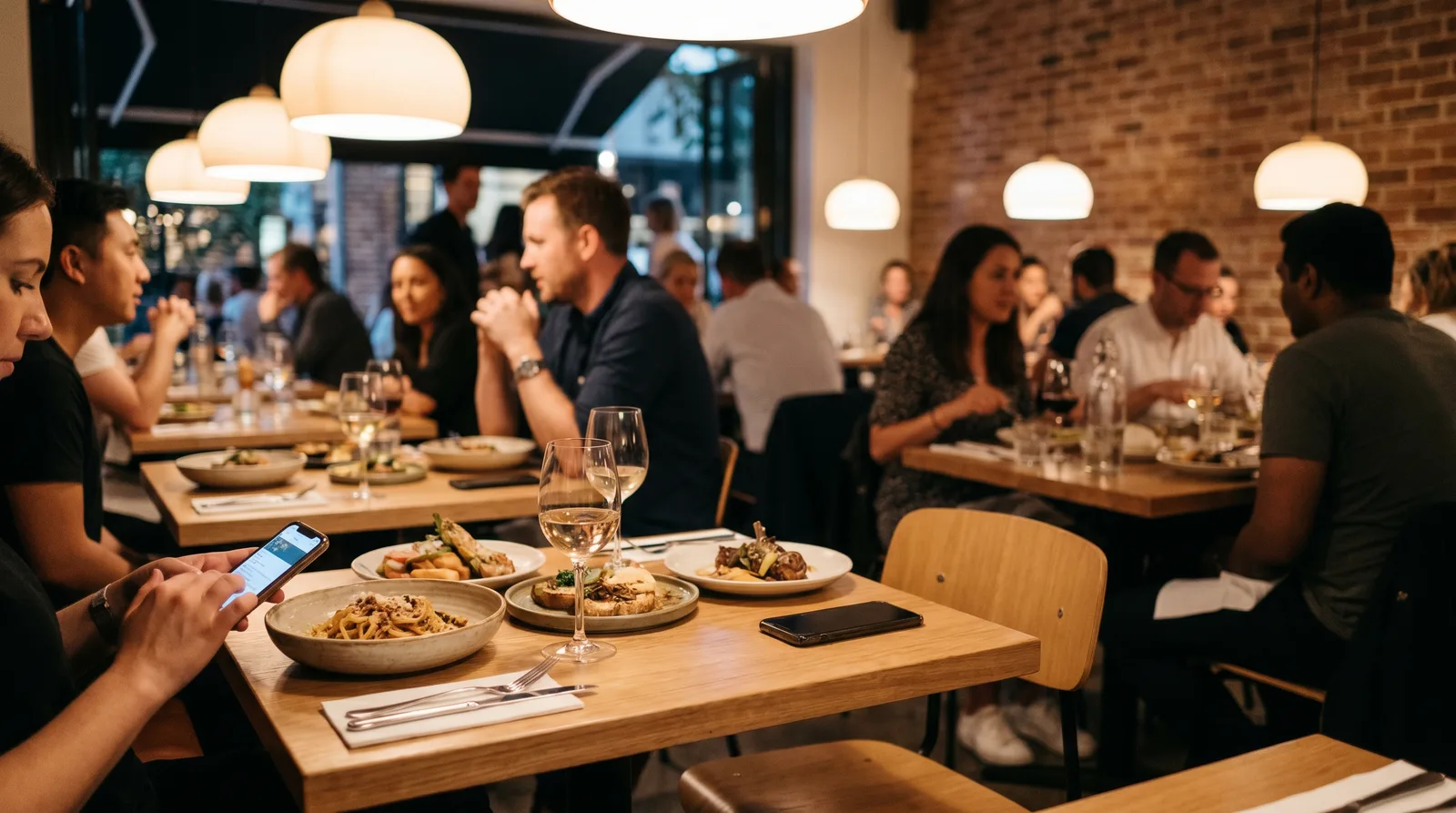
Think about what happens today. A guest scans a QR code and scrolls through your digital menu on their phone. They tap categories, read descriptions, select modifiers, and eventually place an order. It works - but it's still friction.
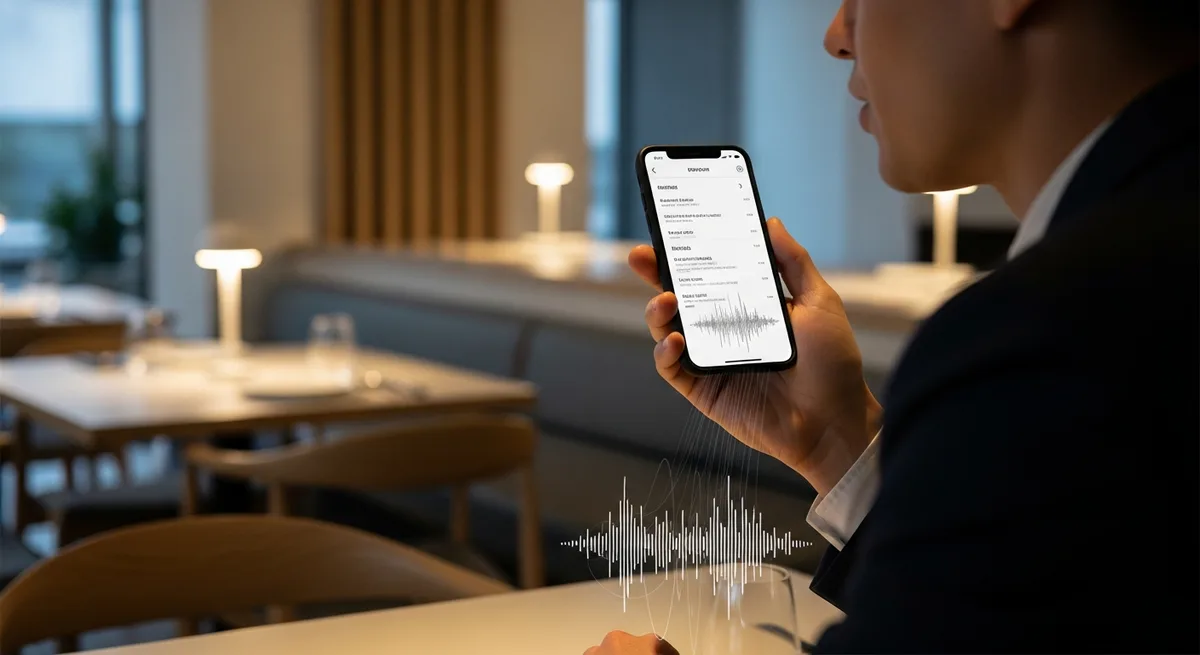
Now imagine: the guest scans the same QR code, but instead of scrolling, they say, "I'll have the grilled salmon, no capers, extra lemon, with the house salad and a glass of the Sancerre." The system confirms the order on screen, the guest taps once to submit, and it's done.
Voice ordering layered on top of a digital menu doesn't replace the visual experience - it accelerates it. For complex modifications, allergy callouts, or large group orders, voice is dramatically more efficient.
Why Gen Z and Accessibility Will Drive Adoption
Gen Z expects it. This generation grew up with voice assistants. Diners aged 18-27 are two to three times more likely to use voice-enabled ordering than diners over 45. As Gen Z's share of restaurant spending grows, their preferences will reshape ordering interfaces.
Accessibility advocates demand it. For guests with visual impairments, motor disabilities, or low digital literacy, tapping through a phone-based menu can be genuinely difficult. Voice ordering removes those barriers entirely. Restaurants that adopt voice-friendly menus aren't just chasing a trend - they're expanding who can comfortably dine with them.
Technical Requirements: What Your Restaurant Needs
You don't need to rip out your current setup:
- A modern digital menu platform. Your menu system needs structured data - not a static PDF. Platforms like Vino organize menu items, descriptions, allergens, and pricing as clean, structured data - exactly the foundation a future voice AI layer would need to interpret.
- Structured item and modifier data. Voice AI needs to understand that "no onions" maps to a modifier on a specific item.
- Integration-ready architecture. Look for platforms with open APIs or webhook support.
- Reliable Wi-Fi and cellular coverage. Voice processing happens in the cloud.
- Staff training. Your team needs to understand how voice orders enter the kitchen workflow.
If you're already running a well-structured digital menu, you're 80% of the way there. To be clear: voice ordering is not something Vino offers today - what Vino's feature set delivers is the digital-menu foundation voice interfaces will eventually plug into: clean item data, real-time updates, photos, and translations.
Privacy and Comfort: Will Diners Actually Speak Orders at the Table?
The honest answer: adoption will be uneven.
Where voice ordering will thrive first: fast-casual and counter-service restaurants, outdoor dining and patio settings, private dining and hotel room service, drive-thru and pickup lanes.
Where it will take longer: fine dining (where server interaction is part of the experience), tightly packed casual dining rooms.
Restaurants can mitigate discomfort by offering voice as an *option*, not a requirement. The best implementations let guests switch seamlessly between tapping and speaking. Some platforms are exploring whisper-mode recognition, which could make table-side voice ordering feel far less conspicuous.
Privacy concerns are equally important. Restaurants should choose partners that process voice-to-text in real time without retaining audio recordings.
How to Future-Proof Your Digital Menu for Voice Today
- Audit your menu data structure. Make sure every item has a clear name and well-defined modifiers. Abbreviations and inside jargon will confuse voice AI.
- Ensure your platform supports APIs. If your provider locks your data in a closed system, that's a red flag.
- Add natural-language descriptions. "Grilled Atlantic salmon with roasted vegetables and lemon butter" is voice-AI-friendly. "Salmone alla Griglia (GF, DF) - mkt" is not.
- Collect guest feedback on ordering friction. The pain points they identify are exactly what voice ordering will solve.
- Follow the space. Keep an eye on restaurant technology trends in 2026 and subscribe to updates from your platform provider.
Voice ordering for restaurant digital menus isn't a question of if - it's a question of when. The restaurants that win this shift will be the ones who built a clean, structured, integration-ready digital menu today and were ready to flip the switch. Start with the fundamentals: structured data, a modern platform, and a mindset that treats your digital menu as a living system. The voice interface is coming. Make sure your restaurant is ready to answer.
Ready to go digital?
Create your restaurant's smart digital menu in minutes with Vino. No app downloads, no complicated setup.