Top Restaurant Technology Trends in 2026
From AI-powered menus to contactless ordering and smart analytics, explore the restaurant technology trends shaping hospitality in 2026.
On this page 7
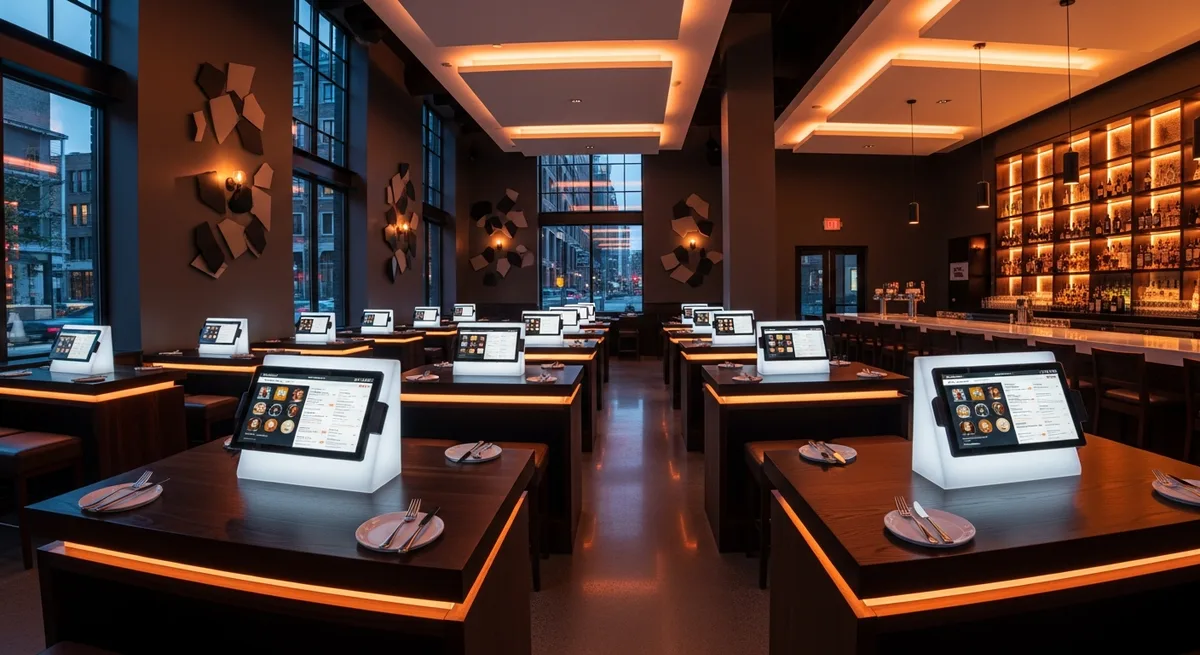
The restaurant industry has always been shaped by technology - from the first mechanical cash registers of the 1800s to modern cloud-based POS systems and online reservation platforms. But the pace of change is accelerating. According to Deloitte's 2024 restaurant industry outlook, technology investment in the restaurant sector has grown by over 25% in the past two years alone, as operators seek every available edge in a competitive and margin-thin industry.
In 2026, several technology trends are converging to fundamentally reshape how restaurants operate and how guests experience dining. These are not futuristic concepts - they are happening now, and the restaurants that embrace them early are already pulling ahead of the competition.
Here are the trends every restaurant operator should be watching, understanding, and planning to adopt.
AI-Powered Personalization
Artificial intelligence is no longer a buzzword reserved for Silicon Valley pitch decks - it is a practical, accessible tool that restaurants of all sizes are using today. AI-powered menu platforms can analyze ordering patterns across thousands of transactions and suggest items that a specific type of guest is likely to enjoy, similar to how Netflix recommends shows or Spotify suggests playlists.
The applications go beyond simple recommendations. Some platforms are using AI to dynamically adjust menu item positioning based on time of day, weather conditions, local events, or historical sales data. A cold, rainy evening might see hot soups and comfort food promoted to the top of the digital menu, while a sunny afternoon automatically highlights salads, cold beverages, and lighter fare. A platform detects that dessert orders spike after 8:30 PM and repositions the dessert section higher in the browsing flow during late dinner service.
AI is also transforming the visual side of menus. Platforms like Vino use AI to enhance phone-quality food photos into professional-looking images, and can even generate realistic dish images from text descriptions alone. This means that every item on your menu can have a compelling visual representation, regardless of whether you have a food photographer on retainer.
This level of personalization and automation was impossible with static paper menus. It represents a genuine competitive advantage for early adopters - one that compounds over time as the AI learns more about your guests and your menu performance. As we explored in our article on why digital menus are the future, the shift from static to intelligent menus is one of the most significant transformations in restaurant history.
Contactless and Mobile-First Ordering
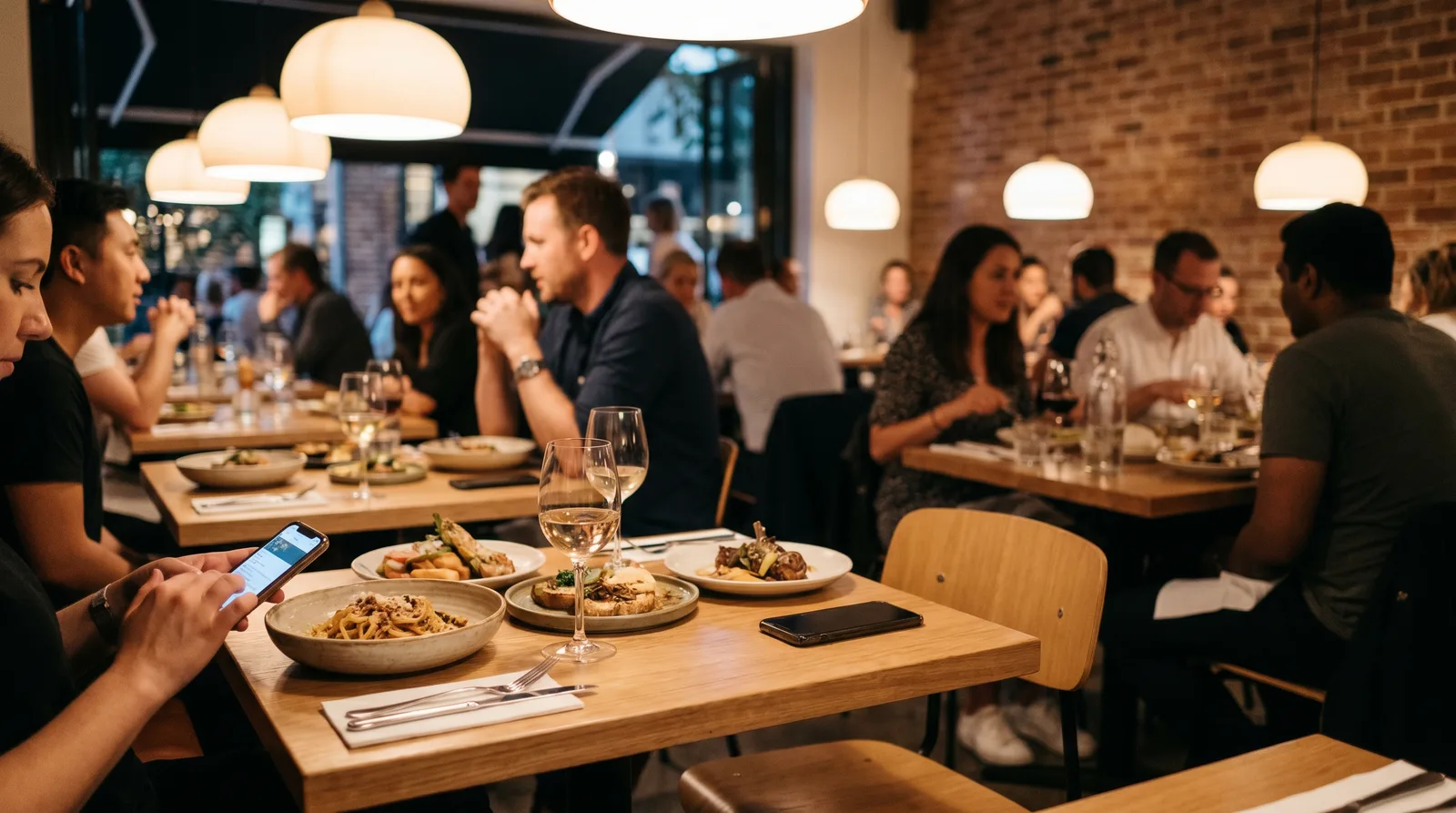
The shift to mobile ordering - dramatically accelerated by the pandemic - is now permanent and deepening. Guests increasingly expect to browse menus, customize their selections, place orders, and pay, all from their own devices. This is not limited to fast-casual or quick-service restaurants. Full-service dining establishments are adopting mobile ordering for dine-in service as well, finding that it complements rather than replaces traditional hospitality.
The key innovation in 2026 is making this experience truly frictionless. Early QR code menus required clunky PDF downloads or directed guests to slow, poorly designed mobile websites. The best platforms today deliver an experience that feels like a native app - fast, smooth, and intuitive - without requiring any download at all. Guests scan a QR code and interact with a high-performance web experience that loads in under two seconds.
This matters because the biggest historical barrier to QR menu adoption was the guest experience itself. People did not want to download an app just to order dinner, and they were frustrated by slow, ugly mobile pages. When the digital experience is genuinely better than the paper alternative - faster, more informative, more visually appealing - adoption happens naturally and guest satisfaction increases.
Built-in ordering and payment is the next frontier, and digital menu platforms are racing to close that loop - Vino, for example, has built-in ordering on its roadmap, coming soon. Guests who can browse, order, and pay without waiting for a check experience dramatically reduced friction, which translates directly to higher satisfaction scores and faster table turnover for the restaurant.
Smart Menu Analytics and Data-Driven Engineering
Data-driven decision making is transforming menu engineering from an art into a science. Traditional menu engineering relied on gut instinct, anecdotal feedback from servers, and basic sales reports that showed what sold but not why. Modern digital menu platforms provide a completely different level of insight.
In 2026, the smartest restaurants have access to detailed analytics that would have been unimaginable a decade ago. They can see which items are viewed most, which have the highest conversion rate from view to order, where guests drop off in the browsing process, how different menu layouts and descriptions affect ordering behavior, and how external factors like weather, day of week, and time of day influence preferences.
With this data, restaurants are essentially running A/B tests on their menus, just like e-commerce companies test their product pages. They experiment with different item descriptions, photo styles, price points, and section ordering. They discover that moving a high-margin item from position six to position two in a category increases its orders by 35%. They find that adding a photo to a previously text-only listing doubles its conversion rate.
The result is menus that are scientifically optimized for both guest satisfaction and profitability. This is not about tricking guests into ordering things they do not want - it is about presenting your offerings in the most clear, appealing, and effective way possible. Guests get a better experience, and the restaurant earns more per table.
Integrated Kitchen and Front-of-House Systems
The gap between front-of-house and back-of-house technology is closing rapidly. For decades, these were separate worlds: the dining room had its POS system and the kitchen had its ticket printer, and the connection between them was a server walking back and forth. Modern restaurant technology stacks are eliminating this disconnect entirely.
When a guest places an order from their phone via a digital menu, that order can appear instantly on the kitchen display system - no server intermediary needed. The kitchen sees the order in real time, with all customizations and special requests clearly displayed. The system can automatically route different items to different stations: appetizers to the cold station, entrees to the grill, drinks to the bar.
This integration reduces miscommunication dramatically. No more illegible handwriting on tickets, no more servers forgetting to mention a modification, no more confusion about table numbers. It speeds up service because the kitchen starts preparing the moment the order is placed, not five minutes later when the server has a chance to enter it. And it frees front-of-house staff to focus on genuine hospitality - checking on guests, making recommendations, and creating the personal connections that define great dining experiences.
The most forward-thinking operators are taking integration even further, connecting their digital menus to inventory management systems so that items are automatically removed or flagged when ingredients run low. This prevents the frustrating experience of a guest ordering something that turns out to be unavailable.
Multilingual and Accessible Dining Experiences
As global tourism rebounds to pre-pandemic levels and cities become more multicultural, restaurants are investing in technology that serves genuinely diverse audiences. This is not a nice-to-have feature for restaurants in tourist areas - it is a fundamental business requirement.
Digital menus with automatic language detection represent a quantum leap over the old approach of printing separate menus in different languages. The guest's phone tells the menu platform what language they prefer, and the entire menu - names, descriptions, ingredients, allergen information - appears in that language instantly. No asking the server for a different menu, no struggling with Google Translate, no awkward pointing at items.
In markets like the UAE, Southeast Asia, and Southern Europe - where restaurants routinely serve guests speaking dozens of different languages - multilingual digital menus are proving transformative. A single restaurant in Dubai might serve guests in Arabic, English, Russian, Hindi, Chinese, and French in a single evening. Providing an excellent menu experience to all of them simultaneously is something only technology can achieve.
Accessibility is an equally important dimension. Digital menus are inherently more accessible than paper. Guests with visual impairments can use their phone's built-in screen reader or text enlargement features. Guests with mobility challenges do not need to handle a heavy, awkward menu binder. And the ability to filter by dietary restriction or allergen serves guests with health conditions in a way that paper menus never could.
Sustainability Through Technology
Sustainability is a growing priority for both diners and operators, and technology is a powerful enabler. The environmental impact of the traditional restaurant model is significant: paper waste from menus and receipts, food waste from poor inventory management, and energy waste from inefficient kitchen operations all contribute to a substantial environmental footprint.
Digital menus eliminate paper waste entirely. A busy restaurant that previously went through thousands of printed menus per year produces zero menu waste after switching to QR codes. When you multiply that across an industry of millions of restaurants, the paper savings are enormous - along with the associated water, energy, and chemical usage of the printing process.
Smart inventory systems, often integrated with the same digital menu platforms, reduce food waste by providing accurate demand forecasting. When you know exactly what sold on similar days in the past and can see real-time ordering trends, you can prep more accurately and waste less. Some restaurant groups report reducing food waste by 20% or more after implementing integrated digital systems.
Energy-efficient kitchen equipment, smart HVAC systems, and waste tracking software round out the sustainability technology stack. Restaurants that can demonstrate a genuine commitment to sustainability through their technology choices are increasingly attractive to environmentally conscious diners - a demographic that is growing rapidly and spending more.
The Takeaway for Restaurant Operators
The restaurants thriving in 2026 are the ones that view technology not as a cost center or a necessary evil, but as a strategic investment that pays dividends across every aspect of their operation. The common thread across all of these trends is clear: technology that improves the guest experience while simultaneously reducing operational friction and costs will win.
You do not need to adopt every trend at once. The smartest approach is to start with the highest-impact, lowest-friction change and build from there. For most restaurants, that starting point is a digital menu - it touches every guest, improves the experience immediately, and generates data that informs every subsequent decision.
Whether you are a single-location bistro or a growing multi-unit chain, the time to invest in restaurant technology is now. The gap between tech-forward restaurants and those still operating with legacy tools is widening every quarter, and it becomes harder to catch up the longer you wait. Platforms like Vino make it easy to start with a smart digital menu and expand your technology footprint from there - no massive upfront investment, no complicated implementation, and no long-term lock-in required.
Ready to go digital?
Create your restaurant's smart digital menu in minutes with Vino. No app downloads, no complicated setup.