Get Your Restaurant Found in ChatGPT & AI Search
Learn how to get your restaurant found in ChatGPT and AI search in 2026. Use menu schema, consistent pricing, and structured digital menus to feed AI answers.

On this page 7
A tourist lands in Barcelona, opens ChatGPT, and types "best gluten-free brunch near the Gothic Quarter open right now." Three restaurants get named; the booking goes to one of them before any Google search happens. To get your restaurant found in AI search, your data has to be the data assistants trust enough to name.
To get your restaurant found in AI search, you need machine-readable menu data, consistent prices and hours across every platform, strong recent reviews, and clear FAQ-style content. AI assistants assemble answers from these structured signals, so the cleaner and more complete your data, the more often you get named.
Why AI Search Is the New Discovery Channel
Diners increasingly start with an assistant instead of a search bar. They ask conversational questions, get a shortlist, and act on it. There is no page two to scroll, no map pack to scan, just two or three recommendations delivered as a sentence.
That compression changes the stakes. In classic search, ranking tenth still earned occasional clicks; in an AI answer, being left out is total invisibility. Data from Statista shows generative AI adoption climbing sharply, and dining discovery is squarely in its path.
The upside is that most restaurants have not adapted yet. Those that structure their data now become the ones AI tools trust and cite, while competitors still rely on a PDF menu no machine can read.
How AI Tools Decide to Get Your Restaurant Found in AI Search
AI assistants do not visit your dining room. They build answers from sources they can parse and cross-check, favoring businesses whose information is consistent and current. A few signals carry most of the weight.
- Structured data, the schema markup on your site that labels your name, address, hours, cuisine, and menu items
- Consistency across platforms, matching details on your site, Google Business Profile, and major directories
- Review volume and recency, recent, specific reviews that confirm what you serve and how well
- Crawlable, plain-language content, pages that answer real questions instead of burying them in a graphic
- Authoritative mentions, citations from local press, food blogs, and reputable directories
When these line up, an AI model can confidently state that you exist, that you are open, and that you serve what the diner asked for. When they conflict, the model hedges or skips you. This is the core of answer engine optimization restaurants need: feed clean, agreeable signals everywhere.
Make Your Menu Machine-Readable With Schema
A menu trapped in a PDF or a flat image is invisible to an AI model. It cannot read a dish name, a price, or an allergen note from a graphic. The fix is menu schema for ai: structured data that exposes each item, description, and price as labeled, machine-readable fields.
In practice that means using Schema.org Restaurant and Menu markup so assistants can parse your offerings the way they parse a spreadsheet. Done right, an AI model can answer "do they have vegan ramen under $15?" because it can actually see the item, the tag, and the price.
- Mark up your business with Restaurant schema, including cuisine, price range, and opening hours
- Expose your menu with Menu and MenuItem schema so individual dishes and prices are readable
- Add allergen and dietary tags in your data, not just as icons on an image
- Keep descriptions in real text, never baked into a picture an assistant cannot read
This is one place a structured digital menu does the heavy lifting automatically. Our guide on restaurant local SEO and your menu digs deeper into how menu structure feeds both traditional and AI-driven discovery.
Keep Pricing and Hours Consistent Everywhere
Nothing erodes AI trust faster than contradictions. If your site says you close at 10 PM, Google says 9 PM, and a delivery app shows a price from last spring, an assistant cannot tell which version is true, so it often drops you from the answer entirely.
Consistency is not glamorous, but it is decisive. Pick a single source of truth and make every platform match it. The most common failure point is pricing, because printed and screenshotted menus go stale the moment costs change.
- Audit your hours across your site, Google Business Profile, and every delivery and review app
- Sync your prices so a $14 burger is $14 everywhere, not three different numbers
- Update seasonal items and 86'd dishes instead of leaving them live
- Standardize your name, address, and phone to the exact same format on every listing
A live, centrally managed menu solves most of this by pushing one accurate version to your QR code, your website, and the data assistants read. For the broader picture, see our roundup of restaurant technology trends for 2026.
FAQ Content and Reviews That Feed AI Answers
AI assistants love content that already looks like an answer. When you publish clear questions and concise replies, you hand the model ready-made sentences to quote. A short FAQ covering parking, dietary options, and reservations does real discovery work.
Reviews matter just as much. Assistants weigh recent, specific feedback heavily, because it confirms your claims with outside voices. A steady flow of detailed reviews mentioning the dishes and experiences you want to be known for nudges AI tools to recommend you for those exact queries.
- Write a plain-language FAQ page answering the questions diners actually ask
- Encourage reviews that mention specific dishes, dietary needs, and occasions
- Respond to reviews to signal an active, trustworthy business
- Keep an up-to-date About page so models understand who and where you are
The goal is to remove every reason an assistant might hesitate. Specific, structured, current content gives it confidence to name you.
How a Structured Digital Menu Helps Get Your Restaurant Found in AI Search
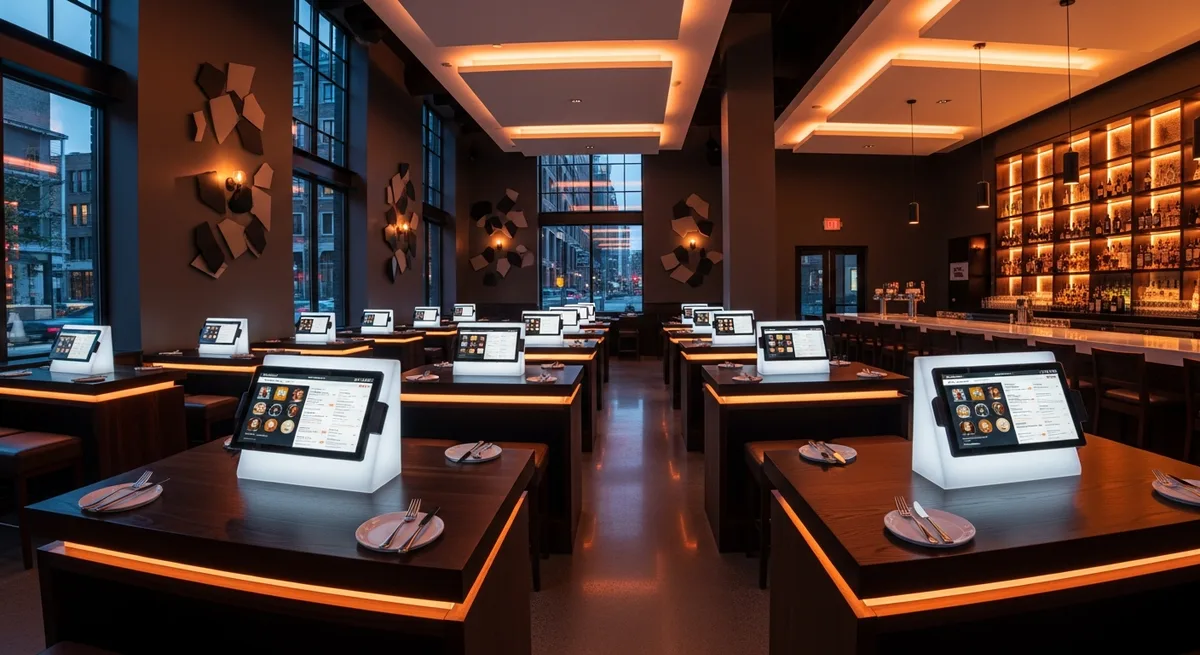
Most of the work above collapses into one foundation: a digital menu built on structured data rather than a static file. When your menu lives in a platform that outputs clean schema, items, prices, descriptions, and dietary tags are already in the format AI tools read, and one edit updates every channel at once.
That is the design philosophy behind Vino Smart Menus, a menu platform for restaurants. Items carry descriptions, allergen tags, and prices as real structured fields, your menu speaks nine languages for international guests, and a single update keeps your QR code, website, and AI-readable data in sync. The result is fewer contradictions for assistants to trip over and a far better chance to get your restaurant found in AI search.
Want to put this into practice without rebuilding your site? Start free or book a quick demo and we will help you turn a static menu into structured, AI-ready data that assistants can actually quote.
Frequently Asked Questions
How do I get my restaurant to show up in ChatGPT?
Make your menu and details machine-readable with structured data, keep pricing and hours consistent across every platform, maintain strong recent reviews, and publish clear FAQ-style content. AI assistants pull from these signals, so the cleaner and more complete they are, the more often you get named.
Does a digital menu help with AI search visibility?
Yes. A structured digital menu exposes items, prices, and descriptions in a machine-readable format that AI answer engines can parse. That makes it far easier for tools like ChatGPT to understand what you serve and surface your restaurant when a diner asks a matching question.
What is answer engine optimization for restaurants?
Answer engine optimization is structuring your online presence, menu schema, consistent data, FAQs, and reviews, so AI tools cite you in their answers. It complements traditional local SEO by feeding assistants the clean, current signals they need to recommend you with confidence.
Ready to go digital?
Create your restaurant's smart digital menu in minutes with Vino. No app downloads, no complicated setup.